Surface finishing is no longer a labor intensive process It is now a process that is precision-driven. Coating quality has a direct influence on durability, corrosion resistance and how the product is perceived in today’s manufacturing environment. A lot of facilities employ paint robots to enhance control and uniformity as global standards tighten up and customers require flawless finish.
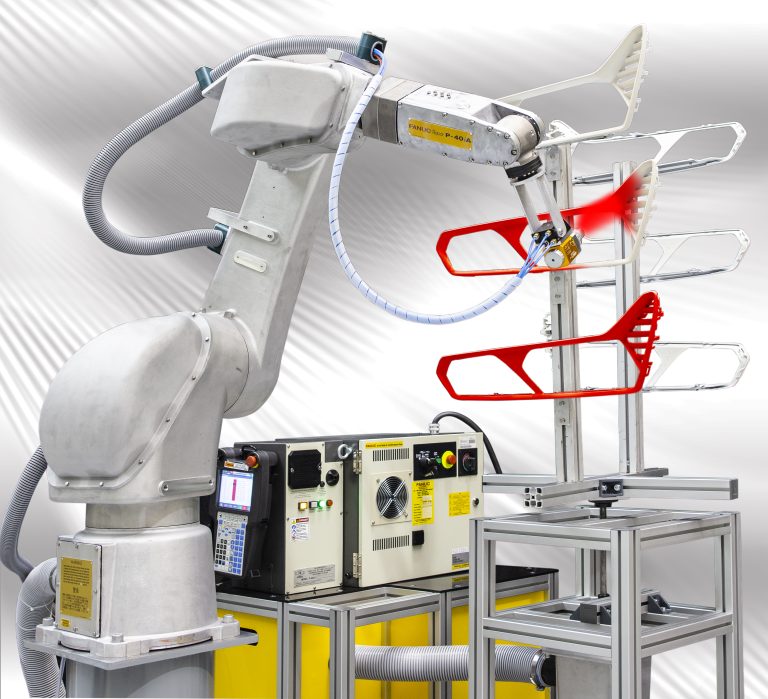
Image credit: automatedsolutions.com.au
A modern paint robot brings structured motion and programmable accuracy to applications that once depended on operator technique. Automating the paths and angles of spray and speed, removes many of the inconsistencies which lead to uneven film construction or excessive material use. This leads to coating processes that are stable and promotes First Time Quality.
Consistency Performance, Efficiency, and Measurable gains
Manual painting usually introduces variations in coverage and thickness due to human fatigue or minor technique differences. Paint robots eliminate this variability by employing the exact motion patterns in each cycle of production. This repetition level ensures an even surface finish and an optimal distribution of the material on every part.
The efficiency of transfer in modern robotic paint systems has also been improved. Overspray can be reduced by ensuring a specific distance between the applicator, and the component. This allows for more coating to reach the target surface. Lower material waste directly impacts cost savings, while decreased emissions of volatile organic compounds support efforts to ensure environmental compliance.
The integration of the handling of fluids into paint robotics ensures precision in mixing ratios for multi-component coats. Inconsistencies can be eliminated which could compromise the quality and integrity of the finished product. By combining stable flow control with adjustable parameters, manufacturers can modify atomisation patterns and spray pattern settings in real-time.
Productivity and safer working environments
Utilizing a robot painting system has substantial benefits in terms the increased availability. As opposed to manual processes, robot paint cells work continuously and have minimal interruption. Once programmed, they provide consistent throughput without the need to take breaks or be under constant surveillance.
In facilities handling solvent-based or two-component coatings, safety considerations are vital. In the case of reactive or explosive materials, atomised paints can result in dangerous conditions. Modern paint robots operate safely in challenging conditions. This minimizes the risk of exposure to harmful chemicals and improves safety at work.
Conveyor track technology enhances productivity by allowing robot painting as the components continue to move. This lets you work on a wider area and helps to keep production lines running smoothly.
Australian Automation Expertise Supporting Industry
Access to experienced automation partners is essential for companies who wish to modernize finishing processes. In Australia, Automated Solutions has built a strong reputation for offering advanced robotic integration solutions. As FANUC certified robotic integrators with extensive expertise in automation engineering the team helps businesses implement customized robotic paint solutions aligned with their goals for operation.
Automated Solutions combines technical expertise as well as practical experience from the industry to help manufacturers evaluate current processes and designing robotic paint cells that are optimised. By combining collaborative design with simulations and system integration, facilities can understand the anticipated improvement in performance before implementing.
Paint robots aren’t just about automation. It’s about tangible improvement in quality, efficiency and security. Paint robotics that are well-engineered transform finishing on surfaces from a time-consuming, costly and unreliable process to a repeatable, controlled process that is controlled, repeatable and reliable. The assistance of experts in automation will assist manufacturers in improving their competitiveness and guarantee longevity in a highly competitive market.