It’s only further on that the effectiveness of a lift-station will be evaluated. The design is determined by numerous elements, such as calculation of flow, elevation of the site the system pressure, water quality, peak conditions access to maintenance controls, and the future capacity.
The main question important for project managers to ask when comparing the top lift station designers isn’t who can design the pumps. It’s about who can interpret the site’s conditions and operational requirements into a system that remains practical to construct, operate, and maintain.
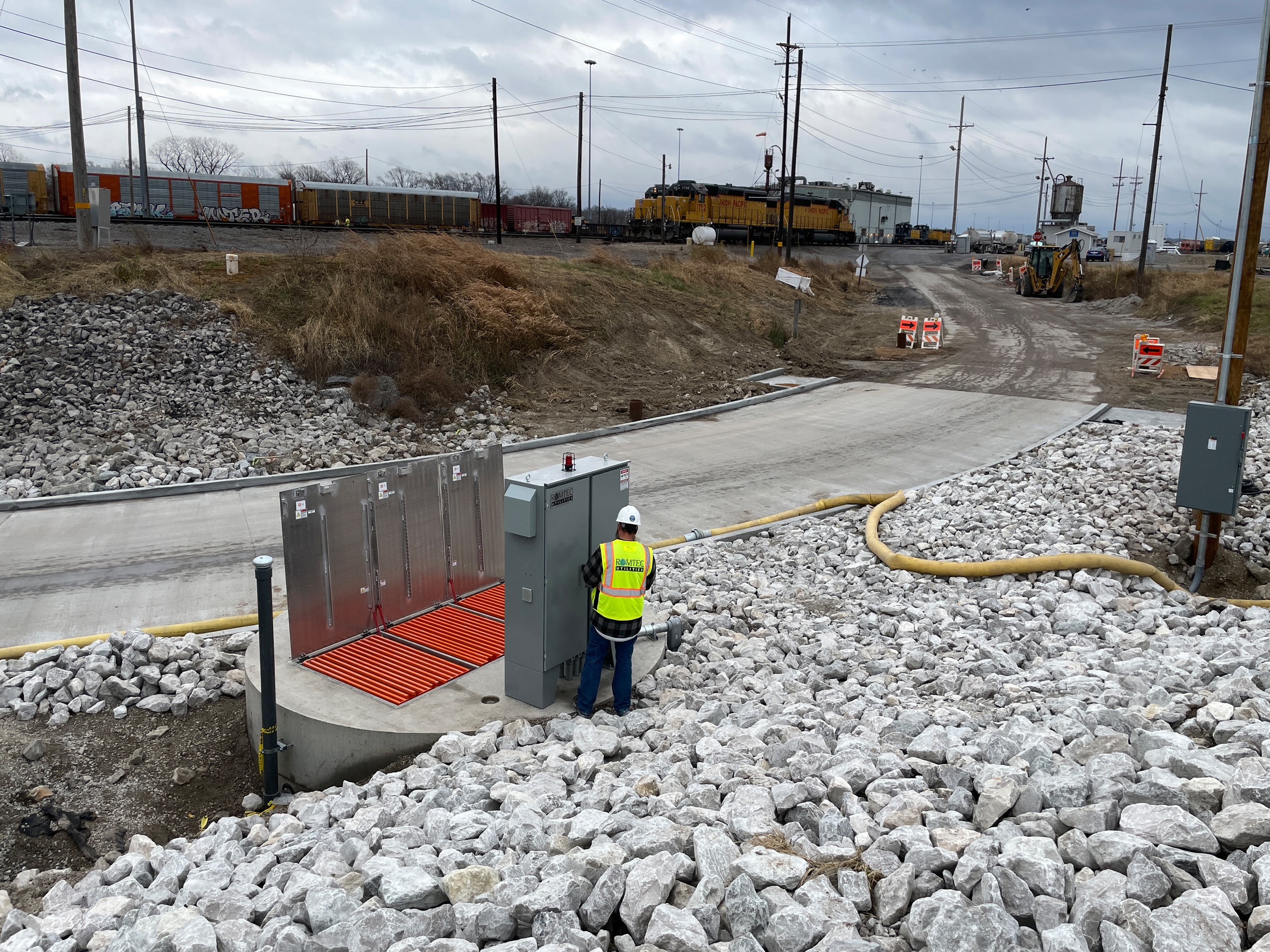
Image credit: romtecutilities.com
Gravity Has its Limits
Gravity is typically the most efficient method of transporting wastewater, but the development pattern and terrain aren’t always in sync. The new residential, commercial and industrial areas are usually too low or too distant from gravity sewer infrastructure.
The lift station is the mechanism that transports the wastewater to the next site of collection. But designing one requires an understanding of both the normal and less convenient situations, for instance, peak inflows pumps, maintenance of pumps equipment failure, the possibility of future increases in demand.
Companies considered among the best wastewater engineers must therefore analyze the entire conveyance problem rather than considering the station as an individual part of the equipment.
The existing infrastructure makes the puzzle harder
The construction of new buildings is not only an issue, but also the challenge of new construction. In addition to maintaining the essential infrastructure for wastewater municipalities frequently need to upgrade or replace old stations.
Existing wetwells, forcemains electrical services and controls along with the site’s boundary, as well as downstream infrastructure can limit the new design. Engineers will have to decide what can be left and what needs to be upgraded, and which need to be replaced.
Romtec Utilities offers pumping solutions for municipal, private industrial, commercial, and retrofit projects. Pumping systems are designed to meet the particular requirements of every project.
Stormwater is governed by different rules
The best stromwater system designers using the supplied search terminology must solve a different hydraulic problem. Stormwater systems can experience massive volume fluctuations based on the amount of rainfall as well as other factors like drainage area and capacity of detention and the rate of discharge.
For example, a station that serves a detention site could require the temporary holding of the runoff and then pump it out at a predetermined rate. Engineers should consider the rate of flow, the head’s condition, conditions of the environment, the flood-management objectives, as well as the specifics of the drainage system receiving it.
Prefabrication Can Move Work Away From the Jobsite
Field assembly is a demanding process that can cause delays, scheduling conflicts delays, and changes to orders. Romtec Utilities uses substantial prefabrication prior to equipment arriving at the site of the project.
When you complete more assembly and quality-control work in a controlled environment, you can reduce the amount of construction required on the ground. Based on the Romtec project approach, certain installations that normally would take weeks could be completed in a matter of days depending on the requirements of the project.
A commitment to the success of engineering includes commissioning
It is not enough to install all the components for a station to be regarded as a dependable one. Romtec Utilities offers installation advisors to assist in construction, including startup controls, checks on control panels pumps, operation testing and employee training. Documentation is also available to provide operators with information on how to maintain the system and to think about future expansion.
For owners searching for the best lift station engineers, this last stage is worth a lot of attention. The final product of quality engineering will be more than an acceptable set of sketches. The proprietor must be left with a system that works, well-trained personnel, helpful documentation, and equipment that is made to be able to handle the daily demands of the facility.